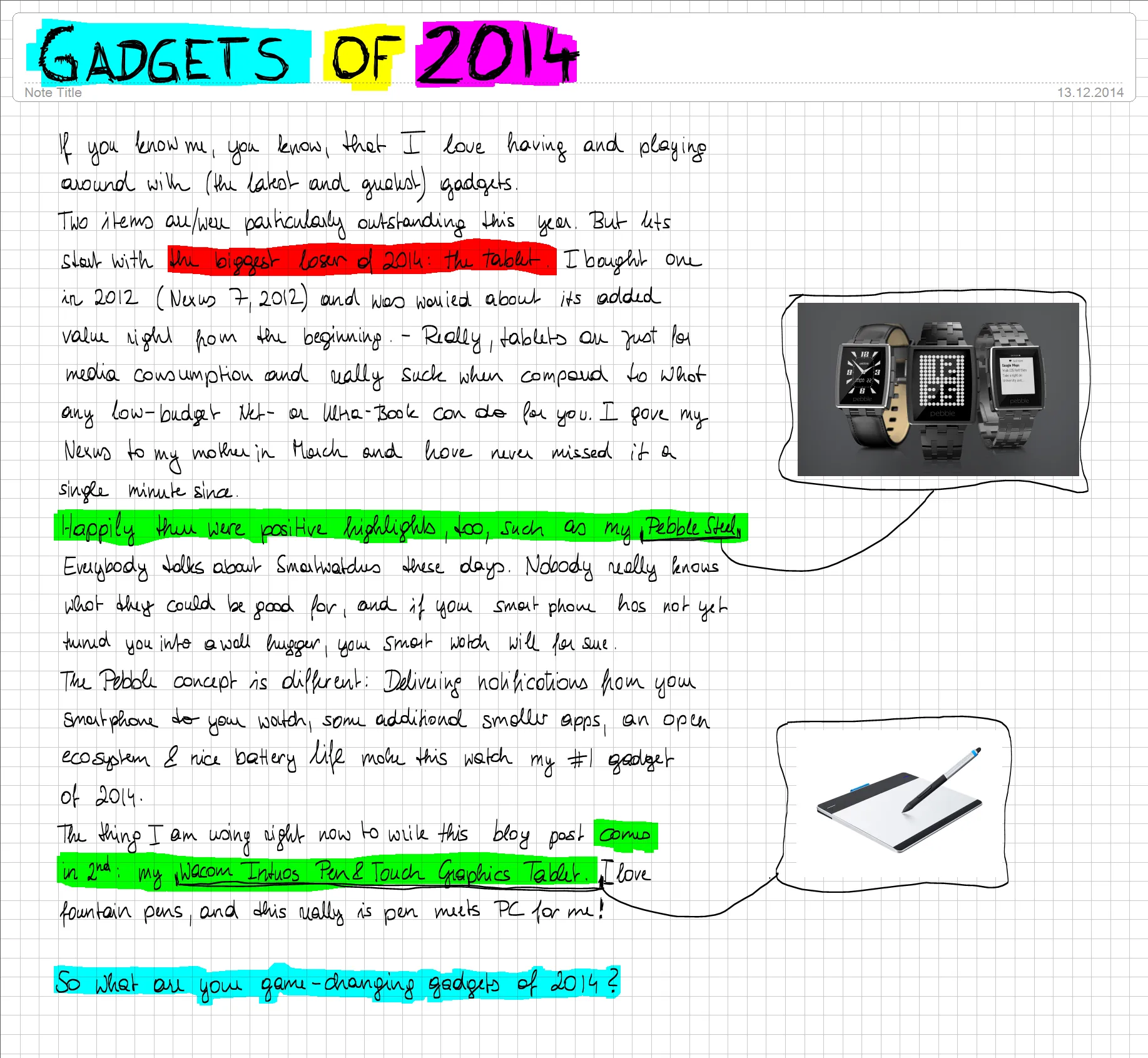
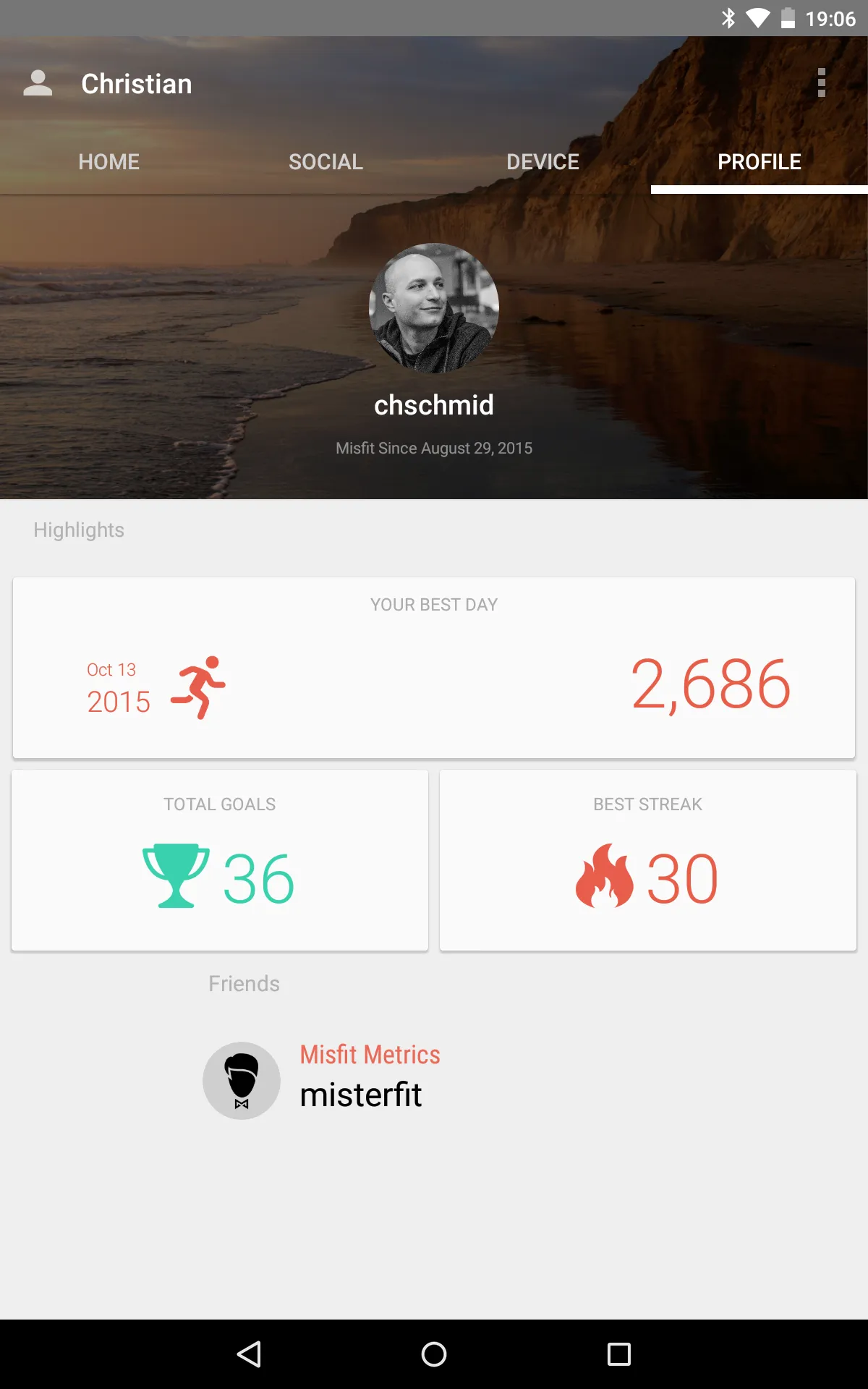
Another 30 day-project: I bought a new gadget while I was in the US 4 weeks ago, a Misfit Flash activity tracker. The idea: It costs only 30 USD and if it would motivate me to stay active for 30 days in a row, this would mean a cost of 1 USD per day. In other words way less than your average gym membership. And I did it - I achieved my activity goal for 30 days in a row.

image

Misfit measures activities in points and I set my target to 1200 points (roughly 12000 steps) per day. While achieving this goal was never physically demanding, I had to schedule additional walks regularly. Especially on days with no other workouts (I run and swim about 1-3 times a week), and on days that were filled with meetings or travel.

I think I’ll move back to using Polar Flow as my primary activity tracker, because in addition to activity in general it can also track running, swimming, cycling, hiking and more using GPS and heart rate sensors. However the idea of tracking my activity and trying to avoid days without activity should stick.

Read more →

Since blogging apparently doesn’t work for me lately I’ll try microblogging for 30 days. Here’s my twitter feed.

Tweets by @chmschmid

Read more →

Another 30 day-project: I don’t drink any alcohol for 30 days. For me alcohol = beer. I don’t usually drink anything other than beer. But beer, I drink a lot. Not as in large quantities at a time, but being Austrian a beer here and there just seems natural. Once you are conscious about it, you realize how many opportunities there are for that one beer.

beer

I am into this project for 16 days now. Honestly I would not have felt comfortable letting everybody know about it on day one - chances were I would not be able to stick to my plan. But now I am certain that it will work.

If that makes me sound like an addict on detox, it’s not what I wanted to suggest. It’s just that during the first week my resolution was tested 5 out of 7 days: You know, friends and colleagues asking about an after work beer. The obligatory beer after the jazz gig. The waiter at that Italian restaurant asking me if I would fancy a Peroni. “No” became an important word. Some people around me keep teasing be, but it only makes me stronger now, because it reminds me about my decision of not drinking beer for 30 days.

Read more →

I own a Pebble Steel for quite some time now, and I still love it. Good battery life and not too many, but useful features. It was a no-brainer that I joined their latest record-breaking kickstarter campaign for the new Pebble time as an early bird.

At the same time I had to do something that I do with almost any piece of hardware that I own and that lets me do it: Write some code for it! Sometimes it’s just the mandatory hello world, but this time it’s a watchface for the Pebble:

IMG_20150301_125316796_HDRI was amazed by how little time it took me to write (or should I say copy and paste) the code. I’ve uploaded the watchface to the Pebble app store so that it can be installed by everybody who owns a Pebble and the source code can be found on github. Please let me know what you think of it and keep the hacker spirit high by writing code for every piece of hardware that you own!

Read more →

Thank you all for dropping by in 2014! For those who care, here are the blog stats that wordpress sent me for 2014: http://jetpack.me/annual-report/16165614/2014/

I wish you and your loved ones all the best for 2015! Hope to see you again this year!

Read more →

huemorse


Send your personal message out into world via Morse code transmitted by my Philips Hue light bulbs. If you want to see what people send, you might want to stand here or here.

This is the next evolutionary step from a previous project called PIMORSE. If you would like to take a look at the source code head over to https://github.com/chms/huemorse.

Read more →

For as long as I can think I’ve had one or more songs every year that were like my own personal summer soundtrack. When I hear one these songs they put me right back in time by bringing back memories, smells, tastes, feelings, …

So here is this year’s song:

Video: Fiva - Alles leuchtet feat. 5/8erl in Ehr'n

What is interesting to note is that it makes use of different German accents.

Read more →

Cotton


I just felt like posting another youtube video of a song I’ve been digging lately. Enjoy!

Watch on YouTube

Read more →

Public-Key Cryptography is a truly magical thing and I often wonder why we don’t use it more often. We go on and complain about how it is too easy for government agencies to look into our digital lives, while we do have all the tools to prevent it. Only we don’t use them and we don’t seem to ask facebook, gmail and so on to use them - not that they would. The funny part is that it would not require a lot of effort, because computers could automatically do all of that stuff in the background. All that would be needed is that we were able to securely store one, long password (the private key).

In a nutshell public-key cryptography is a mathematical concept that allows us to encrypt a message that is intended to be read by just one person and to sign something to guarantee that it really came from you.

Let’s take a closer look: public-key cryptography is based on a pair of keys, lets call them #1 and #2. When one uses key #1 to encrypt a message one can only decrypt it again using key #2. The same is true for a message encrypted with key #2 - it can only be decrypted using key #1. In other words the two keys are kind of reversible operations that work in both directions. For instance

  • Plain text -> Apply Key #1 -> Cypher Text -> Apply Key #2 -> Original Plain Text
  • Plain text -> Apply Key #2 -> Cypher Text -> Apply Key #1 -> Original Plain Text

but

  • Plain text -> Apply Key #2 -> Cypher Text -> Apply Key #2 -> Nonsense
  • Plain text -> Apply Key #2 -> Cypher Text -> Try something -> Nonsense

In addition to that it is important to know that it is (almost) impossible to find the keys from the Plain text and/or the Cypher Text. Usually a person or entity (lets call this entity Alice) creates a pair of keys, where one is made public (the public key) and where the other key is kept secret. There are two typical use cases:

  1. Anyone can encrypt a message using the public key and send it to Alice. Only Alice and nobody else (e.g., someone who intercepts the cypher text) will be able to read the plain text when only Alice knows her secret key. - This use case is also called “Public-key encryption”.
  2. Alice can encrypt a message using her private key and send it to anyone. If it can be decrypted using the Alice’s public key, one has a guarantee that the original message really came from Alice. - This use case is also called “Digital signing”.

The secret key is Alice’s crown jewel that she must not lose or share with anyone, because anyone in possession of the secret key can do what Alice can do. Well that is why it’s called the secret key. Again, all of this can stay in the background and as it can be done for you by software on your computer/phone/…, that has access to your locally stored secret key. If you are interested in implementing some of this stuff in your life, you might want to take a look at

Just by reading this article and by understanding it, you should have a pretty good idea about what level of protection encryption can give you and where potential problems may lie. Again, never forget: your secret key is your crown jewel that you must never share and that your software must never leak. By the way, this is something that is especially hard to check with closed source software and also something that the heartbleed bug may have caused.

Read more →