I did blog about some website’s admins using their privileges to steal login data two days ago. But I guess that is not enough for a week. Today I was informed by Evernote (a service I don’t really use, but gave a trial run at some point) that Adobe (I have to have an Adobe ID to get and read those DRM protected e-books I buy from Thalia) has leaked my data. You’ve heard right: In a world like this company A starts mining on data leaked by company B and in case your e-mail pops up they inform you that company B has leaked data of 150 million users. - Just in case you use the same passwords for both companies, WHICH YOU SHOULD NOT.

So again a kind word of warning

  1. Use different passwords for the different online services you use.
  2. Use strong passwords, meaning passwords that are long, contain numbers and special characters, are not too obvious and can not be found in a dictionary. E.g., “christian83” or “hellokitty” are bad passwords, while “M9TSdc_R)OGyKNszL[wM” is a good one.

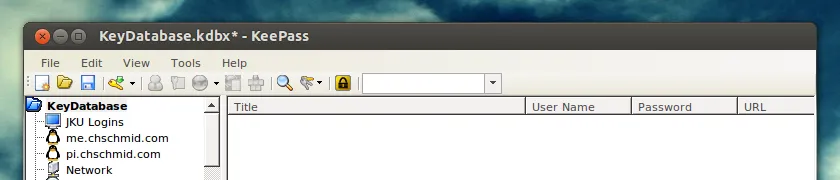
Of course you can either memorize those passwords, or use a safe place to store them such as keepass, which is what I do.

keepass

Read more →

Today I received an e-mail from a website admin, informing me that two of their admins had misconducted. They had stolen the database + all user e-mails and passwords and of course used that information to log into other web services.

Using keepass and different passwords for every website totally makes sense!!! What do you do to protect yourself against something like this?

keepass

Read more →

With all components where they should be and the machine booting, installing an operating system (OS) was the next step. GNU/Linux was the obvious choice and all of my machines run on Ubuntu, so Ubuntu it is.

As the machine is intended to act as server, Ubuntu 12.04LTS would make sense, however as my Xeon Haswell CPU (E3-V1245V3) is relatively new, the Linux Kernel and drivers that come with 12.04 are not a perfect fit for the hardware. - So Ubuntu 13.10 it is.

It was as simple as this: Download the 13.10 server image from http://www.ubuntu.com/, put it on an USB drive using http://www.pendrivelinux.com/ (Windows) or the Startup Disk Creator (Linux). Restart the machine, enter the boot menu by pressing F12 and boot from the USB drive. The setup is quit intuitive. As I started with an empty SSD, all I had to do is select automatic installation using LVM on the empty hard drive. To start with I selected LAMP, OpenSSH and Samba as server roles.

The computer rebooted after the installation leaving me with a login prompt.

login

After login I installed all the stuff that I would need to also run the PC as desktop.


sudo apt-get update
sudo apt-get dist-upgrade
sudo apt-get install ubuntu-desktop vlc vainfo lm-sensors calibre texlive-full ipe audacity p7zip thunderbird eclipse wine git-core keepass2 gparted filezilla inkscape chromium-browser kile qjackctl virtualbox virtualbox-guest-additions-iso pavucontrol pulseaudio-module-jack joe rosegarden xdotool musescore dconf-tools openjdk-7-jdk libva-intel-vaapi-driver ufw gufw nautilus-open-terminal smartmontools gksu gimp build-essential devscripts debhelper javahelper

Finally reboot the machine and you should be greeted by a graphical user interface.

sudo shutdown -r now
Read more →

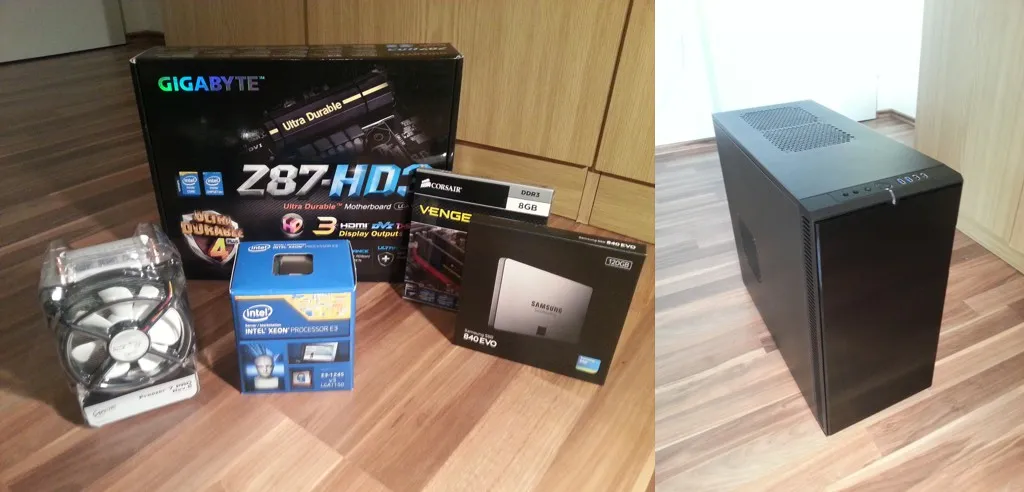
The hardware arrived! Two hours of applied screwdriver science led to this before and after photo.

The Hardware

What was new to me, because I had never done it before, was to mount a CPU into a motherboard socket. I guess I’ve done it right because the machine boots as it should.

Next stop: An operating system.

Read more →

I recently blogged about why it makes sense to run your own server. Although I have a machine running at me.chschmid.com already, I decided to do a serious hardware upgrade.

serverNot because the old AMD E-350 CPU can’t keep up anymore, but because I’d like to use the new machine as my desktop PC as well. So here’s what I ordered (some parts of it are actually not new, but carry over from my old setup)

For all I know this system will be hopelessly over-powered, yet power-efficient, so that it can run 24/7. The parts are probably going to arrive by the end of the week. I’ll keep you posted about the assembly and everything else that’s going to happen.

Read more →

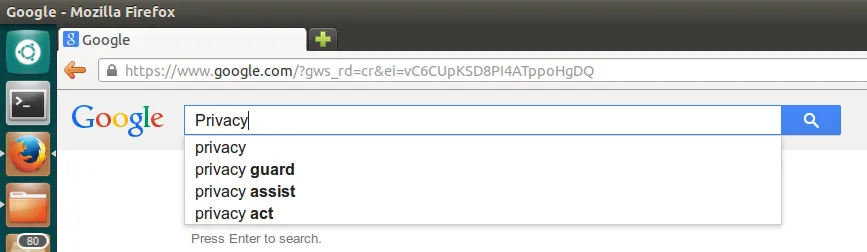
Privacy is a hot topic these days and part of virtually every coffee break discussion I know of. How much do they know? The Googles, Facebooks, Dropboxes, Wunderlists and above all the NSA.
Actually a lot of people who have no idea about the technology side of things have started asking me these questions lately. I can see that their not knowing about the hidden magic in the background that enables the services they use on a daily basis makes them feel really uneasy. The truth is, its simple.

Privacy

Communication

First of all there is communication between computers, which, on a technical level, is the only thing the web itself allows us to do. When you ask google for search results, when you push your files to dropbox, when you have that Skype call with your mom - it’s all communication and exchange of information between two computers over the web.

Let’s take that Skype call for instance and lets picture the web as a city with you in your house (as a stand in for your computer) and the streets that connect all the houses as data highways. Lets also say there is one guy in every street who controls the street. What happens when you want to send a message to your mom is you tell the guy in your street (your provider) to dispatch the message - it’s wrapped in a nice envelope with your address and the destination on it so that he knows where it has to go. He will then walk to the next street, pass on your massage to the person controlling that street and this guy will do the same until the message arrives at your mom’s place.

There are two problems associated with this in terms of privacy

  1. Everyone who is part of the delivery chain might have opened the envelope and might have looked at message.
  2. Even if they have not read your message, they know that there was communication going on between you and your mom and they will also know how much data was exchanged.

Problem 1 can be solved by encrypting the message so that it does not make sense to anyone who might read it on its way. - There are still some issues here when it comes to technical implementations, but essentially, if you do it right, you can make your messages close to unreadable to the outsider. - This by the way is common practice in a lot of applications, which is good. E.g. always look for websites that come via “https” instead of “http”. The “s” really makes the difference! Problem 2 is a little bit harder but still solvable. Say you transmit a secret message to your mom asking her to pass another message to someone else. If anyone wants to track your message to the final destination it will become really difficult as not knowing about the message to your mom asking her to dispatch something for you will make it unclear if any outgoing message from your moms was from you or from her or from anyone else. The more people you put between you and your final destination the harder it will be to track your messages. Essentially this is the idea that the Tor network is based on, however it is not widely used and not common practice.

Data

The second aspect apart from communication is data. You do not only exchange information when storing your files on Dropbox, but you ask them to hold on to that data for you as you ask Google to store your e-mails and Wunderlist to store your todos. They might even store data that you do not ask them to store, like your seach history. The problem here is that those companies sometimes leak data (e.g., PlayStation Network outage) and sometimes share your data with other organizations such as the NSA.

To use the analogy with the city and the streets: If there is someone at your mom’s place or at Dropbox’s place who watches over their shoulder while they decrypt your message, your data will be available to them, even when the data transmission through the streets of your city was safe due to encryption.

If all you want to do is storing your data at someone else’s place you can give it to them in an encrypted way. E.g. only store encrypted zip files on dropbox. Or you can opt out and don’t give any data to them in the first place.

Obviously this does not work for your search terms, that Google has to know about in order to give you results.

The Solution

There is not one size fits it all solution, but on central aspect is to be aware of what data you share online and how others may be able to use it. The analogy with the city and the streets will give you a pretty good idea of who can access what. I don’t think sharing stuff is bad per se, you just have to know about the implications. To give you some examples.

  • Stuff that you put on a website, e.g., your blog, can be seen by absolutely everyone.
  • Stuff that you post to social networks may not be seen by anyone who happens to stand between you and the computers of that social network, but by whoever you allow it to see, by the social network itself and by anyone who they share this information with - willingly or by accident.
  • Even when you are just looking at stuff online you let others know about what you are looking at. This means amazon will learn about what you like simply from you browsing their website. - But to be honest: the employees at your local grocery store also know what you buy on a daily basis.

To be better off in terms of communication

  • Look for encryption so that at least your communication is secure. E.g., look for https instead of http, configurate your e-mail client so that it uses encrypted instead of unencrypted mail transfer.
  • Don’t use things such as FTP to transfer files.
  • …
  • and finally:

Use Your Own Cloud Storage

About 1.5 years ago I set up my own Ubuntu GNU/Linux server, that hosts all my git repositories, files (webdav), calendars (caldav) and contact data (carddav) via owncloud and many other services that I use. The Server is currently running on an AMD E-350 APU, which is soon to be replaced by something better. And that’s the reason why this is just part 1. I’ll post information about my new server setup in the next couple of days, so stay tuned!

Read more →

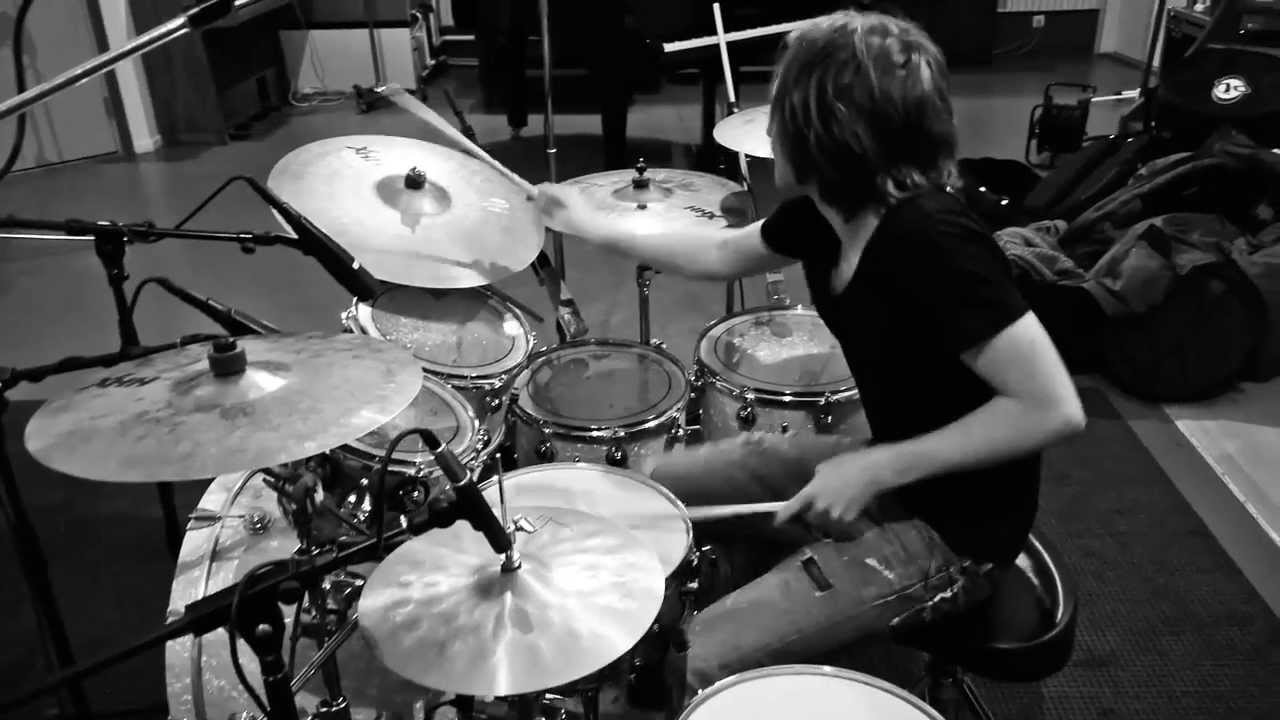
I stumbled across this video last weekend and it made my jaws drop in a way I did not anticipate. Seriously, I have not seen a single video on youtube, that had a similar effect on me.

They are called the the Dirty Loops and they blend pop and fusion in a musically perfect way. All three of them master their respective instruments at simply unbelievable levels.

I still can’t stop watching their videos over and over again. I just love their music so much and a part deep inside of me wants to be able to play like that really badly. I can’t. But if life is fair, making music like that is what I did during my 20s in an alternate universe. Too bad I’m stuck in this one :D

Video: DIRTY LOOPS - Hit Me
Read more →

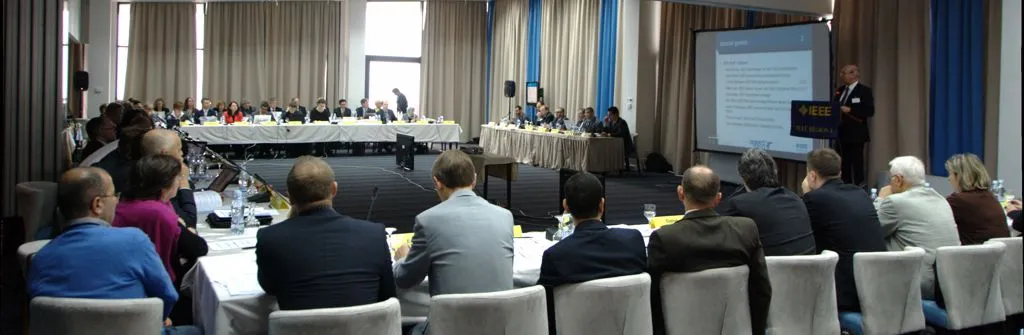
about 1400 km of travel, 3 days, more than 100 IEEE people from over 60 countries, but less than 15 hours of sleep.

I won’t tell you about that short city visit. Most of what has happened this weekend has actually happened at a place called the Sarajevo Hollywood Hotel, where we (the more than 100 IEEE people) and at least five times as many Wrestlers mingled (http://www.worldveteranwrestling-sarajevo2013.com). - Not that we were there for the same reason.

It was the second IEEE Region 8 committee meeting for me and I feel it was even more intense than my first one in Madrid in April. While IEEE is an engineering association, the truth is, these meetings are mostly political - politics about coming up with solutions and policies to “foster technological innovation and excellence for the benefit of humanity”. Apart from the matters at hand, these meetings are great opportunities to witness different styles of leadership, different styles of communicating with each other and different approaches to problem solving in general. The best part is you can actively participate if you don’t mind throwing around, being thrown around and having your head go all wild with thinking.

meeting

Here are some notes I made to myself about the process rather than the outcomes during the meeting:

  1. With most of us being engineers in academia, we are having a huge problem thinking outside the box.
  2. Almost everything you propose, someone will have proposed at some point already. (Maybe this is a direct consequence of 1.)
  3. Although it may lead to wasting your and other people’s time, it is still worth proposing stuff, even if this results in wiser and more experienced people stopping you right away. Otherwise you risk missing the few jewels that might be hidden somewhere in people’s heads!
  4. You would probably need at least as much time for preparations (in terms of goals, strategy, background research) as the meeting takes, to make the most out of it.
  5. Not having a clear vision on certain issues (maybe due to a lack of 4.) will make you feel like bouncing between people’s opinions. - Which, then again, might not be that bad after all for getting an idea about things.
  6. If it comes down to making a decision, following 5 think about Alice in Wonderland’s Cheshire cat. Alice: “Which way ought I go from here?” Cat: “That depends a good deal on where you want to get to?” Alice: “I don’t much care where–” Cat: “Then it doesn’t matter which way you go”
  7. You were quite slow in understanding what people really meant. “Sorry for that.”
  8. If you are working on one-size-fits-all-solutions (which many things on a Regional level are) be careful when you start statements with things like “From my experience …”. While difficult to implement: You really ought to make decisions based on statistical and scientific analysis rather than on very limited personal experiences.
  9. Even if it gets rough sometimes, don’t forget to grab a beer with people at the end of the day and thank them for their contributions. Be respectful: You need them as much as they need you.

I guess I succeeded and failed at all of them and I am not sure if these notes will help me or you in any way. Still I thought I’ll write them down, just in case I want to revisit them before the next meeting …

Read more →

Recently I blogged about my Spotify experience and that I am premium user now. I was amazed by how many people contacted me online as well as in real life, voicing their concerns, which ranged from topics like intellectual property law, the problem that they don’t give you anything that you may keep after your membership ends to net neutrality. All of them do really have a point.

Screenshot-from-2013-07-23-195423

Apart from the interesting discussions I’ve had, this also triggered me to dig deeper and so I happened to stumble across something apparently known as the Open Music Model (OMM).

One of it’s major aspects is a shift from understanding the music business as product-based to a service-based understanding. If you are willing to accept this mode of thinking about music and given the benefits of the OMM, paid, online streaming makes total sense - at least from my perspective.

That being said, I do have to add that Spotify does not implement the OMM to its full extent and leaves out critical parts, which would silence a lot of critics (especially on the consumer side) right away. E.g., the OMM asserts open file formats, without DRM restriction, which may be freely shared by users as requirements. So we’re absolutely not their yet.

Read more →

I do like traveling and working in research (given that you have appropriate funding) + being on an international IEEE committee requires just that. There have been a lot of trips this year that I haven’t even mentioned on my blog.

For each and every single one of them I do have a blog post in my draft folder, which I just never got around to finish and publish. Mostly because these trips usually turn out to be so intensive and exciting, with so many new experiences and people, that it seems virtually impossible to capture them in a blog post. This weekend I was in the Bath and London (UK) for four days.

Tower bridge, London (UK) 2013

I’ll do it differently this time. Instead of trying to capture everything I’ll focus on one topic: UK/US campuses vs. Austrian campuses.

After I had come back from UCLA in 2008, I did get one question frequently: What’s different? The answer is: many things. One of the main differences I experienced in the US and did find again in Bath is the way universities there are not only places for focused professional studies, but places where you actually live. Both at UCLA and at the Uni of Bath you’ll find banks, grocery stores, bars, gyms, running tracks, on campus housing and so much more. It is like they are small self-contained villages. In addition to that a myriad of student clubs enrich the experience of living on campus.

The university I am studying at right now (Johannes Kepler University Linz) does have some of these features, after finally having moved most of their departments to one centralized campus. Still, try walking campus on an idle weekday night (apart from Thursday, which is the big party night on campus) and you’ll find it to be deserted. Don’t get me wrong, you will see countless researchers behind windows and the occasional, sleep-deprived grad student heading for the vending machine. However you won’t encounter undergrads in their training cloths or campus sweaters, you won’t see dancing or fencing classes behind all-glass window fronts, the posters won’t invite you to join some fancy chess, music or religious club and you won’t be able to find a running track.

In Austria if you want to engage in any of these activities, it’s up to you to look for them somewhere else. Unis are for learning and for taking exams, but the institutions won’t tell you or make suggestions whatsoever about how to live your outside-the-uni life. Neither do they care about whether you take pride in studying at this very place or not.

Both systems have advantages and disadvantages. I do feel that the UK/US system generates social pressure and it is easy for students to get lost in different activities every night, with the potential danger of burn-outs. On the other hand I do think your time at uni should be wholesome and teach you more than just the subjects you are enrolled in, which is in favor of the UK/US campus culture.

The Austrian/German system does generate a significant amount of graduates who are not involved in any social activity at all, which I think is utterly wrong. Don’t ask me for numbers, but I can give you a few examples which ended up having quarter-life and midlife crises. On the other hand not having your hands full with all that uni social stuff, leaves space for students to get involved in their local communities. Plus the lack of university driven activities does of course also not rule out the possibility that students with a shared interest form unofficial clubs.

These observations are obviously very subjective and might not apply to all schools. Whatever kind of system you are in or about to enter, I do have three pieces of advice regarding campus life and your time at university in general, which I’d like to share with you:

  1. Move out of your parent’s home. While I would suggest a dormitory for starters (you’ll get to know so many people who will help you and who you can help) an apartment is also an option. This is the time for you to become self-dependent.
  2. Engage in at least one social activity or club, but monitor your stress level and learn to say “No” when required.
  3. Go abroad and enjoy the ultimate step of self-dependency. It will, for a limited amount of time, give you the opportunity to design your daily life from scratch, plus I guarantee you, you will learn more about yourself than ever before.

Having said that, I have to add that advice should always come with a disclaimer, so I’ll simply cite Mary Schmich here:

“Be careful whose advice you buy, but be patient with those who supply it. Advice is a form of nostalgia. Dispensing it is a way of fishing the past from the disposal, wiping it off, painting over the ugly parts and recycling it for more than it’s worth.”

What’s campus life at your university like?
Read more →